
Pelvic Floor Ultrasound FAQs
-
A pelvic floor ultrasound provides information about the structure and function of your pelvic floor muscles. This scan is commonly used for:
- Patients after childbirth
- Symptoms of prolapse (lump, dragging, or bulging sensation)
- Urinary incontinence (stress or urge)
- Bowel dysfunction (defecatory disorders, suspected rectocele/enterocele)
- Complex or unclear cases where multiple pelvic compartments may be involved
- Suspected recurrence after previous prolapse surgery
- Lumps, suspected cysts, or enlarged glands
-
Our team will provide specific instructions at the time of booking, and these should be followed carefully.
A full bladder is required for this scan. Please drink 300ml of water one hour before your appointment and try not to empty your bladder. If you experience difficulty holding your bladder, please mention this at the time of booking.
You will be able to empty your bladder during this can.
If you require additional imaging, such as a pelvic ultrasound, MRI, or defaecogram, preparation guidance may vary.
Specific preparation instructions will be provided to you, based on the scans required, at the time of booking.
-
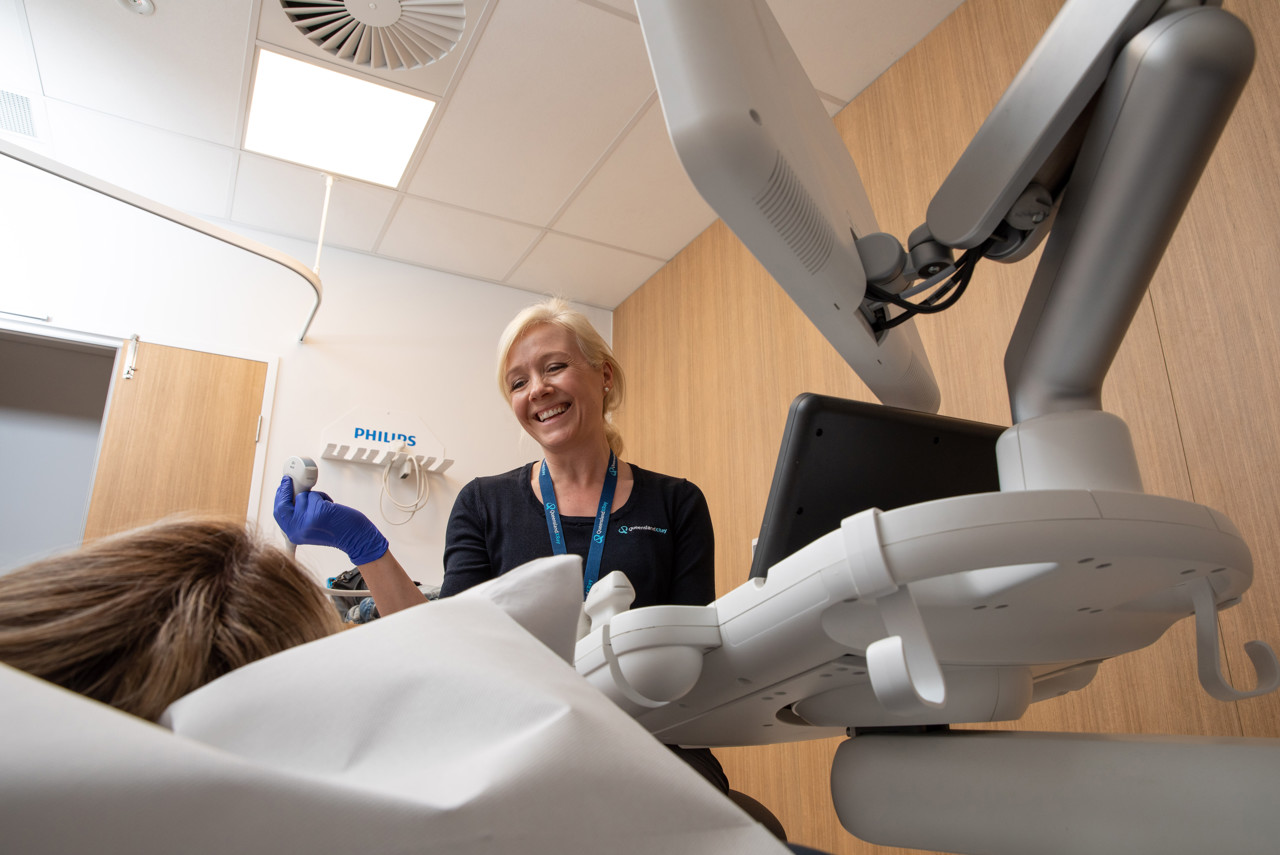
You will be asked to undress from the waist down and lie down on the examination bed. You will be provided with a sheet or drape so that you can cover yourself.
You will be asked to bend your knees, bring your heels close to your bottom.
The highly trained technologist, known as a sonographer, will complete your scan.
Warmed gel will be applied to the perineum, which is the area between the vagina and the anus. The ultrasound probe, known as a transducer, rests on the vulva, and the gel helps the sonographer glide the transducer over the area to obtain clear and detailed images.
During the scan, you may be asked to perform breathing exercises and to contract and strain your pelvic muscles
This allows our team to monitor how your urinary muscles are contracting. You may be asked to do this several times, as the sonographer captures images. This helps the team observe how your pelvic and urinary muscles move and function in real time.
In most cases, you will also be asked to stand for part of the scan. If this is needed, the sonographer will assist you.
In addition to a pelvic floor ultrasound, you may also require a pelvic/transabdominal ultrasound and a transvaginal ultrasound.
-
Queensland X-Ray is proud to have a large team of highly qualified and experienced male and female sonographers who are dedicated to delivering the highest standard of patient care. Over the years, we have grown to become one of the largest and most respected training centres for sonography in Queensland. Through our strong commitment to education and professional development, we play a leading role in shaping the next generation of sonographers. Our students are given hands-on training, supervision, mentorship, and access to the latest imaging technology.
If you have a specific requirement regarding your appointment, please let us know at the time of booking so we can best accommodate your needs.
-
A pelvic floor ultrasound will take approximately 30 minutes. More complex scans (e.g. endometriosis assessment) may take longer.
How much will it cost?
Fees for radiology procedures will vary depending on a variety of factors. We will advise you about the cost of your service at the time of booking but if you do have any questions, contact us and one of our team will be happy to help with your query. You can read more about our billing information here.
How do I access my images?
At Queensland X-Ray, we provide our patients with their images and results online. To access your images and results, you’ll need to register for an account when you visit one of our practices. If you’ve already registered, you can access the Patient Portal here.