
Hand and Wrist MRI FAQs
-
Your doctor may refer you for a wrist MRI or hand MRI to assess ongoing wrist pain, hand pain, swelling, limited movement or symptoms following a traumatic injury. MRI is particularly useful when other diagnostic imaging, such as X-ray or ultrasound, have not provided enough information about the soft tissues or complex wrist anatomy.
Your doctor may also refer you for an MRI of the hand and wrist to monitor healing after a procedure, assess changes in normal anatomy or evaluate symptoms in areas that extend toward the hand.
MRI of the wrist & hand can help evaluate concerns involving:
- Ligament or tendon injuries, including strains, tears or ongoing soft tissue pain
- Joint concerns, including stiffness, instability or reduced movement in the wrist or hand
- Nerve-related symptoms, such as those associated with carpal tunnel or irritation of nearby nerves
- Conditions affecting the joints or soft tissues, including ganglion cysts, inflammation or rheumatoid arthritis
- Persistent pain or swelling that has not improved or has no clear cause
-
A hand or wrist MRI provides detailed images of the bones, joints, ligaments, tendons and soft tissues in the region. MRI is particularly helpful for assessing the complex joint structures of the wrist and identifying subtle changes that may not appear on other imaging.
- Depending on your symptoms, a wrist or hand MRI may assess:
- Bones and joint structures, including alignment of the wrist and hand
- Soft tissue injuries, such as ligament tears or tendon damage
- Joint conditions, including inflammation, stiffness or reduced movement
- Common conditions, such as ganglion cysts, carpal tunnel or rheumatoid arthritis
- Injuries, including strain, overuse or traumatic injury
- Swelling or changes in blood flow in the surrounding soft tissues
-
Most hand and wrist MRI scans require little or no preparation. Please bring any previous scans or X-rays related to your hand or wrist with you to your appointment. If you have had those scans performed at Queensland X-Ray, we will already have access to your images.
You will be asked to change into a hospital gown and remove any jewellery, hearing aids, dentures or other metallic items. Wearing clothing that is easy to remove is recommended.
-
- When you arrive at one of Queensland X-Ray’s MRI practices, our reception team will go through some questions with you to confirm your booking details.
- So our team can perform your scan safely and effectively, you are required to complete a patient safety questionnaire and change into a gown which we will provide. You will be asked to remove any jewellery, hearing aids, dentures and any other loose items. Your belongings will be safely stored for you during your examination.
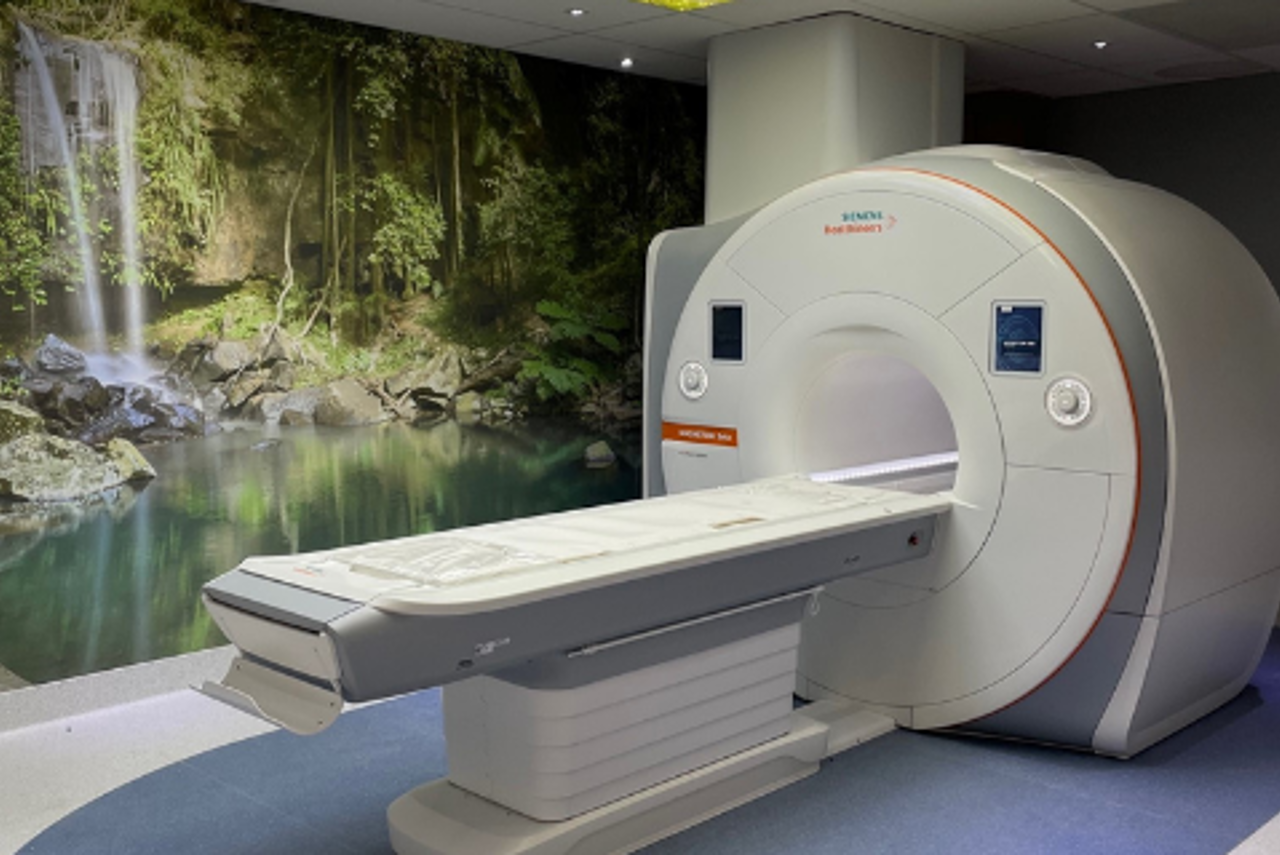
- To perform your scan, you will lie on the MRI table, and the bed will move so that your hand or wrist is positioned in the centre of the scanner.
- Devices called coils are used to help create the images. The radiographer will take a series of images to assess bone, cartilage, joint fluid and soft tissue structures.
- Throughout the procedure, you will be required to keep still.
- The MRI machine makes a very loud knocking and humming sound when the images are being taken. Both hearing protection and an emergency buzzer are provided for the duration of the scan. You will be offered headphones through which the MRI radiographer can talk to you and play a selection of music to help reduce the noise and pass the time more quickly. The knocking will intermittently stop while the computer processes the images for a few seconds at a time before starting again. No one else will be in the room during your scan, but you can press the buzzer should you need to communicate with the MRI radiographer or stop the exam at any time.
- Some hand and wrist MRI scans will require us to insert an intravenous (IV) line into your arm. We use this to administer contrast that can help to enhance the images we take. When the contrast is injected, you may get a metallic taste in your mouth, and this is completely normal. It is important to tell the staff if you have had any form of reaction to MRI contrast before.
-
For most hand or wrist MRI scans, you will lie face down, with your arm above your head. If this is not achievable, your images will be taken with your hand and wrist by your side.
If you are concerned about claustrophobia, your doctor may prescribe sedation to help you complete the scan. In some situations, twilight sedation can be arranged at one of our hospital practices. Please mention this at the time of booking so appropriate arrangements can be made.
-
Safety is paramount with MRI scanning, so at the time of booking your MRI and when you arrive at the MRI clinic for your appointment, you will be asked certain safety questions.
An MRI scanner is essentially a large magnet and certain metal objects like implants are not MRI safe or are MRI conditional. Please let your referring doctor and Queensland X-Ray staff know if you have any of the following:
- Cardiac pacemaker
- Defibrillator
- Cochlear implant
- Neurostimulator
- Aneurysm clips
- Active implanted biomedical devices
- Infusion pump
- Continuous glucose monitor
- Any implants or devices in your head or body
Please let us know at the time of booking if you are pregnant.
-
Most hand and wrist MRI scans take approximately 15 minutes to 1 hour to complete.
-
To make an MRI booking online with Queensland X-Ray, access our portal here.
How much will it cost?
Fees for radiology procedures will vary depending on a variety of factors. We will advise you about the cost of your service at the time of booking but if you do have any questions, contact us and one of our team will be happy to help with your query. You can read more about our billing information here.
How do I access my images?
At Queensland X-Ray, we provide our patients with their images and results online. To access your images and results, you’ll need to register for an account when you visit one of our practices. If you’ve already registered, you can access the Patient Portal here.