
Opening Hours
-
7:00 am - 6:00 pm
-
7:00 am - 6:00 pm
-
7:00 am - 6:00 pm
-
7:00 am - 6:00 pm
-
7:00 am - 6:00 pm
-
Closed
-
Closed
Finding us
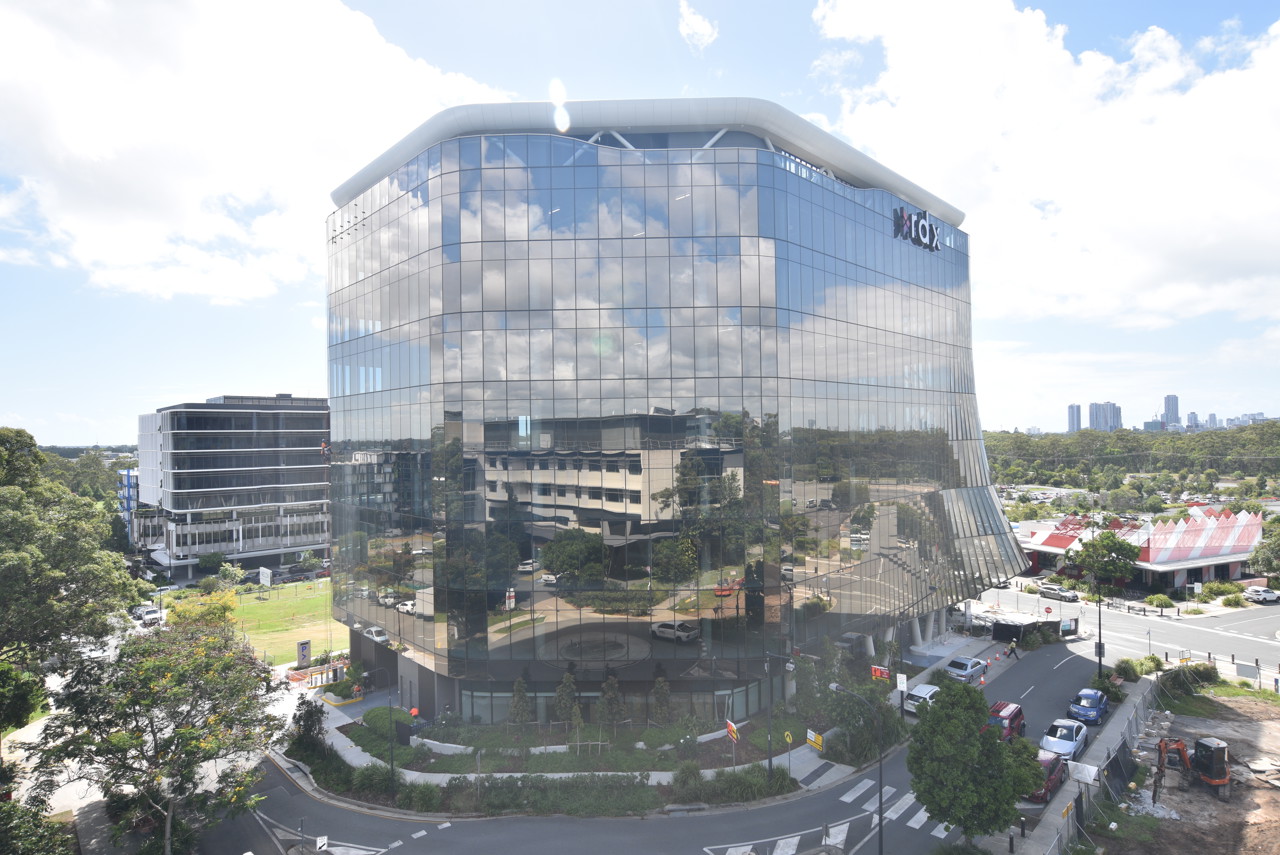
Adjacent to the Gold Coast Private Hospital, Queensland X-Ray - Gold Coast Lumina is located within the Gold Coast Health and Knowledge Precinct, on the ground floor of the RDX Lumina building. Access to the practice is available via Nexus Way.
Parking
Free on-site parking is available for patients.
Accessibility
This practice is wheelchair accessible
Services at this location
- Computed Tomography (CT Scan)
- CT Calcium Scoring
- Interventional Procedures
- Interventional CT
- Ultrasound Imaging
- Interventional Ultrasound
- Vascular Ultrasound
- Breast Ultrasound
- Musculoskeletal Ultrasound
- Morphology
- Third Trimester Scan
- Nuchal Translucency
- Early Pregnancy Ultrasound
- Magnetic Resonance Imaging (MRI Scan)
- Brain MRI
- Spine MRI
- Cardiac MRI
- Musculoskeletal MRI
- PET/CT Scan
- FDG PET Brain Scan
- Oncological FDG PET Scan
- DOTATATE PET scan
- PSMA PET scan
- X-ray
- Lung Screening (NLCSP)
Gold Coast Lumina Service Information
X-ray Gold Coast Lumina, Southport
An X-ray image is created when a small amount of radiation is passed through a body part. Different internal structures absorb different amounts of radiation, which is why the end result of an X-ray shows the white solid bone structures and grey muscle areas.
X-ray is the most common form of medical imaging. In order to receive an x-ray you will need a referral from a medical practitioner. You do not need an appointment to access X-ray services.
Just visit us at the Lumina practice in Southport during regular business hours for a walk-in X-ray.
Gold Coast Lumina X-ray FAQs
-
No booking is required for an X-ray at Queensland X-Ray Gold Coast Lumina – we offer convenient walk-in X-ray services. Just bring a valid referral and come in at a time that suits you.
-
Queensland X-Ray offers walk-in X-ray services during the business hours of practices that provide X-ray. You do not need to make an appointment, but we recommend checking your local practice's opening hours before attending.
-
Wait times for a walk-in X-ray can vary depending on the practice. Typically, you'll be seen shortly after checking in with our reception team. On rare occasions, there may be a brief wait if urgent cases require priority attention, but our team will always get to you as quickly as possible.
The X-ray itself usually only takes several minutes, although your total visit may take longer depending on the body part being examined and the number of images required.
-
There are several reasons why your doctor may have referred you for an X-ray.
These reasons may include:
- Broken or fractured bones
- Diagnosis of arthritis in the joints
- Diagnosis of chest and lung conditions, such as pneumonia
-
There is no preparation required for an X-ray, however:
- Please bring your referral letter with you when you attend for your X-ray.
- Bring your Medicare card and concession card, if applicable.
- While it’s not essential, it’s helpful to wear loose-fitting clothing without metal buckles, fasteners, or zips. In some cases, you may be asked to change into a gown.
- If you are pregnant, you can still have an X-ray; however, your referring practitioner will discuss this with you.
-
Your X-ray will be conducted by an experienced radiographer. The images will then be reviewed by a radiologist. The radiographer will escort you to the examination room, explain what will happen and instruct you on how to prepare. The scan is not performed in an enclosed environment, but on an open bed, so you won’t need to worry about confined spaces.
-
This will depend on the body part being imaged and the number of X-rays taken.
Once the X-rays have been performed, the Radiographer will check to ensure they have all the images required. This can take several minutes.
-
There is radiation involved in an X-ray – but we use low-dose radiation software throughout all our imaging procedures. If you would like more information about radiation risks, including information relevant to pregnancy and the unborn child, you can read about Radiation Dose here.
MRI Gold Coast Lumina, Southport
MRI stands for magnetic resonance imaging and refers to a medical imaging scan that uses a strong magnetic field and radio waves to create detailed images (or pictures) of your body’s soft tissues, bone, fat, muscles, blood vessels, internal organs, brain and spinal cord. It is a non-invasive procedure used to help diagnose a health problem. No ionising radiation is used to create the images.
An MRI scan examines a specific area of your body. An MRI radiographer will perform the procedure, and one of our specialist medical imaging doctors (known as a radiologist) will review and interpret the images. A report of findings will be prepared and sent to your referring practitioner, so it is important to book a follow-up appointment with them.
At Queensland X-Ray Gold Coast Lumina, our MRI scanners use market leading technology to provide high-quality diagnostic imaging using short scan times to provide a comfortable experience. If you are wondering where to get an MRI in Southport, our Lumina practice in Southport can perform different types of MRI scans depending on the region of the body that requires scanning and the reason for the scan. Information about the different types of MRI scans can be found on our website.
Gold Coast Lumina MRI Imaging FAQs
-
The preparation for the different types of MRI scans can vary. Please refer to the specific type of MRI scan you are having for further information.
You will be asked to change into a gown during the procedure, so we recommend wearing clothes that are easy to remove.
-
- When you arrive at Queensland X-Ray Gold Coast Lumina, our reception staff will go through some questions with you to reconfirm your booking details.
- So our team can perform your scan safely and effectively, you are required to complete an MRI safety questionnaire and change into a gown, which we will provide. You will also be asked to remove any jewellery, hearing aids, dentures and any other loose items. Your belongings will be safely stored for you during your examination.
- In order to perform your MRI procedure, you will lie down on the MRI bed, which will move the part of the body we are scanning to the middle of the bore (hole). Throughout the procedure, you will be required to keep still.
Some MRI examinations require us to insert an intravenous (IV) line into your arm. We use this to administer contrast dye that can help to enhance the images we take. When the contrast is injected, you may get a metallic taste in your mouth, and this is completely normal. It is important to tell the staff if you have had any form of reaction to MRI contrast before. - The MRI machine makes a very loud knocking and humming sound when the images are being taken. Both hearing protection and an emergency buzzer are provided for the duration of the MRI examination. You will be offered headphones through which the MRI radiographer can talk to you and play a selection of music to help reduce the noise and pass the time more quickly.
- The knocking will intermittently stop while the computer processes the images for a few seconds at a time before starting again. No one else will be in the room during your scan, but you can press the buzzer should you need to communicate with the MRI radiographer or stop the exam at any time.
-
If you require an MRI scan and suffer from claustrophobia or are uncomfortable with the restrictive space, you can have your doctor prescribe some sedation for you to complete the scan. In more extreme cases of claustrophobia, we can provide twilight sedation at one of our hospital practices. Just mention this at the time of booking.
-
Safety is paramount with MRI scanning, so at the time of booking your MRI and also when you arrive at the MRI clinic for your appointment, you will be asked certain safety questions.
An MRI scanner is essentially a large magnet, and certain metal objects like implants are not MRI safe or are MRI conditional. Please let your referring doctor and Queensland X-Ray Gold Coast Lumina staff know if you have any of the following:
-
Cardiac pacemaker
-
Defibrillator
-
Cochlear implant
-
Neurostimulator
-
Aneurysm clips
-
Active implanted biomedical devices
-
Infusion pump
-
Any implants or devices in your head or body
Please let us know at the time of booking if you are pregnant.
-
-
Most MRI scans take approximately 15 minutes to 1 hour to complete, depending on the part of the body we scan.
-
To make an MRI booking online with Queensland X-Ray, access our portal here.
CT Scan Gold Coast Lumina, Southport
CT stands for Computed Tomography and uses multiple X-ray images to produce fine cross-sectional images of the part of the body being investigated.
A CT scan uses X-rays and digital computer technology to obtain these cross-sectional images of the bones, blood vessels and soft tissue inside your body. These scans provide more detailed, higher-quality medical imaging than a plain X-ray image.
Gold Coast Lumina CT Imaging FAQs
-
-
Our team will provide any specific instructions at the time of booking, and these should be followed carefully.
-
We recommend wearing a separate top and bottom during your appointment, as this makes changing for the examination easier.
-
If you are pregnant or there is a possibility of you being pregnant, please let our staff know before your examination.
-
-
You may be asked to change into a hospital gown for your scan to ensure clothing does not affect the quality of the scan. You may also be asked to remove any jewellery, glasses or other metal objects that could affect the image quality.
For some CT scans, it may be recommended to have an injection of contrast material (or CT contrast dye). This will be discussed with you prior to your examination.
A CT scanner is a doughnut-shaped machine with a bed passing through the middle. You will be asked to lie on the bed as still as you can to improve the diagnostic accuracy. The bed will move through the scanner to acquire your images.
Throughout the CT, you will be able to communicate with the radiographer performing your scan.
You may be given breathing instructions to follow. The radiographer performing your examination will explain this to you before your scan.
-
A CT scan can take between 5 minutes and 30 minutes depending on which part of the body is scanned and whether you require a contrast injection.
-
To book a CT appointment with Queensland X-Ray, access our portal here.
-
The terms CAT scan and CT scan refer to the same type of medical imaging procedure. CAT stands for “Computed Axial Tomography”, and CT is simply “Computed Tomography”. Although the CAT scan was the first term used, CT scan has become more common in recent years.
-
CT scans are a powerful diagnostic tool that can detect life-threatening conditions such as haemorrhage, blood clots, and cancer. Early detection of these conditions can be lifesaving.
A CT scanner uses X-rays, which produce ionising radiation that has the potential to cause biological effects in living tissue. The risk of developing cancer from X-ray radiation exposure is minimal.
It is important to note that in almost all cases, the benefits of a CT scan outweigh the risks associated with radiation exposure. If you have any concerns about your upcoming CT scan, please do not hesitate to discuss them with your doctor.
PET/CT Scan Gold Coast Lumina, Southport
A PET/CT is a nuclear medicine scan that shows the metabolic function of an organ or tissue (PET scan) as well as structural images of the organ in 3D (CT). This makes detecting even the smallest lesion or abnormality a lot easier for our nuclear medicine physicians. PET stands for Positron Emission Tomography. It uses a small amount of radioactive material, known as a tracer, which is injected into your body and is absorbed into your organs and tissues. CT (Computed Tomography) is a type of X-ray. By combining the two scans, this modality has the ability to detect physiological activity and structural changes of abnormalities or lesions.
PET/CT has proven to be extremely sensitive for detecting early stages of cancer and disease, and can localise smaller lesions that may be undetectable by other imaging procedures or CT alone. PET/CT information can be used to determine what combination of surgery, radiation therapy and chemotherapy is most likely to be successful in managing a patient’s cancer treatment. Additionally, PET/CT can help to monitor the effectiveness of therapy and assist in planning for surgery and radiotherapy. At Queensland X-Ray Gold Coast Lumina, patients can access PET/CT imaging at our Lumina practice in Southport.
Gold Coast Lumina PET/CT Scan FAQs
-
We use positron emission tomography (PET) imaging, a form of nuclear medicine imaging, combined with CT scanners to provide unparalleled structural detail as well as insight into physiological behaviours within the body, which assists with:
-
the more accurate diagnosis of several diseases, such as cancer and heart disease
-
identifying areas of abnormal activity that can be associated with cancer cells
-
assessing changes in blood flow and activity affecting brain and heart tissue
-
determining what combination of surgery, radiation therapy and chemotherapy is likely to be the most successful in managing a patient’s cancer
-
monitoring the effectiveness of therapy and assisting with a plan for surgery and radiotherapy
By combining functional information from PET imaging with detailed CT anatomy, PET/CT can detect abnormal activity even when there is little or no obvious structural change. This means small tumours may be seen earlier than on other imaging tests or CT alone, supporting a more confident assessment and helping clinicians identify early-stage disease and plan the most appropriate treatment.
-
-
Correct preparation for a PET/CT is very important to improve the accuracy of the imaging test. Preparation varies between scans and even with the time of your scan. A detailed preparation sheet will be given to you when you make your appointment.
The tracers used in PET have a shelf life of only a few hours, so it’s important you follow the instructions of your doctor and our nuclear medicine technicians closely. If poor preparation forces your appointment to be rescheduled, the tracer ordered for your appointment will expire, and this cost may be passed on to you.
-
ARRIVAL (15-30MINS)
When you arrive for your appointment, our reception staff will ask that you complete a questionnaire and sign a consent form. In line with your appointment, a registered nurse will welcome you for the procedure. Please be mindful that some patients take longer than others to get settled, and your appointment time may vary. We make every effort to keep as close to appointment times as possible.
TRACER UPTAKE (60-90MINS)
Once you have changed into a gown (if needed), our nurse will get you settled in a private uptake room. They will then check your blood sugar level and place an IV cannula through which the PET tracer will be injected. You will then be connected to an IV line and be left to relax while the tracer is infused. During this time, you may be permitted to listen to a podcast/audiobook or watch TV.
However, we do not permit any activity that involves holding something to your face (ie watching a movie on your phone or reading a book) as this can affect the quality of the scan. After approximately one hour of rest, we’ll take you through to the PET/CT scanner.
PET/CT IMAGING (20-30MINS)
A CT scanner is doughnut-shaped with a bed passing through the middle. You will be asked to lie on the bed with your arms stretched above your head as the bed moves through the scanner to acquire your images.
The PET part of the scan detects the radiation released from the tracer, which has now been taken up throughout your body.
The CT part of the scan images your anatomy and alterations in its structure, such as size, shape and other changes related to disease.
The PET and CT images are then combined and used together to diagnose, plan or measure treatment outcomes.
The scan will take between 10 and 25 minutes depending on the reason for your study.
POST IMAGING (20-45MINS)
Following your scan, you will be offered something to eat and be encouraged to stay well hydrated and use the bathroom as required. We will monitor you for 5-15 minutes following the CT contrast injection and then remove your IV line. During this time, we will process your images.
The radioactive tracer remains in your system for a short time following your scan. For this reason, we suggest you limit the time you spend near children and pregnant women for a few hours afterwards.
-
Your PET/CT scan will be performed under the supervision of our team of our nuclear medicine specialists, technicians, radiographers and nurses.
The images our technical staff acquire are reviewed by a specialist who will report on the findings. Queensland X-Ray has a wide range of medical imaging specialists. Often, PET/CT cases are discussed collectively to offer the most thorough clinical analysis.
-
Procedure For staging & restaging of: F-18 FDG Cancer processes GA-68 PSMA Prostate cancer GA-68 DOTATATE Neuroendocrine tumours (NETs)
Ultrasound Gold Coast Lumina, Southport
An ultrasound is a diagnostic imaging tool that uses high-frequency sound waves to create an image of internal body structures, such as internal organs, muscles, blood vessels and soft tissues. The sonographer uses a transducer (a hand-held device that produces and receives the sound waves) to generate images of the patient’s body. Ultrasounds show anatomy in 'real-time', showing movement.
Queensland X-Ray Gold Coast Lumina provides a full range of ultrasound examinations, including specialised cardiac, obstetric, gynaecological and musculoskeletal ultrasound, general and paediatric services.
Gold Coast Lumina Ultrasound FAQs
-
Preparation before your ultrasound scan is very important. Please follow the instructions given to you at the time of booking carefully and thoroughly.
In some cases, you will be asked to fast. This means you should not eat, drink or chew anything 4-6 hours before your appointment. A sip of water is allowed for hydration purposes.For some ultrasound scans, you will be required to have a full or partially full bladder. You will be able to empty your bladder as soon as the scan is over.
If you have any questions about the preparation for your scan, please contact the practice where your appointment is booked.
-
For an ultrasound scan, you will generally be required to lie down on an examination table or bed. During the scan, the area of interest will be exposed, with the rest of your body remaining covered to ensure your privacy and comfort. Queensland X-Ray’s highly-trained ultrasound technologists (known as sonographers) will place gel onto your skin and will then place the transducer in the area that is being studied. A moving image is shown instantly on a monitor screen.
-
Ultrasound is generally regarded as safe, as you are not exposed to ionising radiation like some other forms of medical imaging (e.g. X-rays, CT scans). Instead, ultrasound uses high-frequency sound waves to show images inside the body. Please discuss any concerns with your referring doctor.
-
All ultrasounds at Queensland X-Ray Gold Coast Lumina are performed by sonographers who are highly trained and accredited professionals. Our quality team consists of male and female sonographers who are qualified to perform all diagnostic ultrasound imaging, including breast imaging.
-
To book an ultrasound online with Queensland X-Ray, access our portal here.
Pregnancy Ultrasound Gold Coast Lumina, Southport
Throughout your pregnancy, you may be referred for a number of scans. Most obstetricians and doctors will recommend that a nuchal translucency scan be performed between 12 and 13 weeks and a morphology scan be performed between 20-22 weeks. Using the latest imaging technology, Queensland X-Ray Gold Coast Lumina can provide all the necessary scans during your pregnancy. The nuchal translucency scan is only offered at certain accredited sites, as it is a more specialised scan.
At Queensland X-Ray, we are committed to providing comprehensive and compassionate care throughout your pregnancy journey.
Gold Coast Lumina Pregnancy Ultrasound FAQs
-
Queensland X-Ray offers a comprehensive range of maternal fetal medicine and pregnancy imaging services. These include:
-
Transvaginal ultrasound scans which is an obstetric imaging technique performed in early pregnancy or when a more detailed view is required. A Transvaginal ultrasound involves inserting an ultrasound probe into the vagina to obtain high-resolution images of the pelvic organs, such as the uterus, cervix, and the developing embryo or fetus.
-
Nuchal translucency scans, which are the obstetric imaging performed between 12 and 13 weeks of pregnancy to assess the likelihood of pre-eclampsia or structural or chromosomal abnormalities.
-
Morphology scans, which are performed between 20-22 weeks to examine the baby’s structure and organs, and third-trimester ultrasounds, which are used to monitor the baby’s growth and wellbeing beyond the 27-week mark.
-
-
The cost of ultrasound procedures at Queensland X-Ray can vary depending on the specific service and other factors. The staff at Queensland X-Ray will provide you with a detailed breakdown of the costs associated with your service.
-
Morphology scans occur at the 20-22 week stage of your pregnancy to assess the development of your unborn baby. It is at this stage that the baby’s organs have formed, and we are usually able to view them clearly on the ultrasound. It’s also during this stage that our experienced sonographers will try to identify the baby’s gender. During the ultrasound scan, the sonographer will ask the expecting parents if they would like to know the gender of the baby. This can also be written down on one of our special cards if a gender reveal party is planned. In some instances, however, the baby may be in the wrong position, and they will be unable to confirm.
-
You are unable to take photos or videos during your scan. Queensland X-Ray provides patients with all of their images via our Patient Portal. Shortly after your first visit to Queensland X-Ray, you will receive a text message about accessing your results through our Patient Portal. This secure portal allows you to view and download your medical images and results at any time. It is compatible with most internet browsers and mobile devices, ensuring accessibility from anywhere in Australia.
-
At most of our specialised women’s imaging practices a 3D/4D ultrasound imaging of your baby will be performed if possible and if the baby is in the correct position. Please check at the time of booking your appointment if you require a 4D or 3D ultrasound in our Gold Coast clinics.
-
Whilst we understand it is an exciting time, we limit attendance in the room to one support person due to the precise anatomical assessment required. Whilst it is preferred that small children do not attend these appointments, we understand that at times this may be unavoidable and request that they are appropriately supervised.