
Pelvic Ultrasound FAQs
-
A pelvic ultrasound helps assess the internal organs and soft tissues within the pelvis.
Your doctor may request a pelvic ultrasound scan to investigate symptoms such as pelvic pain, abdominal pain, abnormal bleeding, heavier periods, or infertility. It is also used to detect or monitor ovarian cysts, fibroids, uterine anomalies, pelvic masses and to assess for endometriosis.
-
Our team will provide specific instructions at the time of booking, and these should be followed carefully.
A full bladder is required for a pelvic ultrasound. Please drink 500ml of water one hour before your appointment and try not to empty your bladder. If you experience difficulty holding your bladder, please mention this at the time of booking.You will be able to empty your bladder immediately after your scan, before the transvaginal ultrasound.
To complete a pelvic ultrasound, your abdomen will be uncovered.
-
You will be asked to lie down on a bed, and your abdomen will need to be visible, where the sonographer will apply a gel to your abdomen.
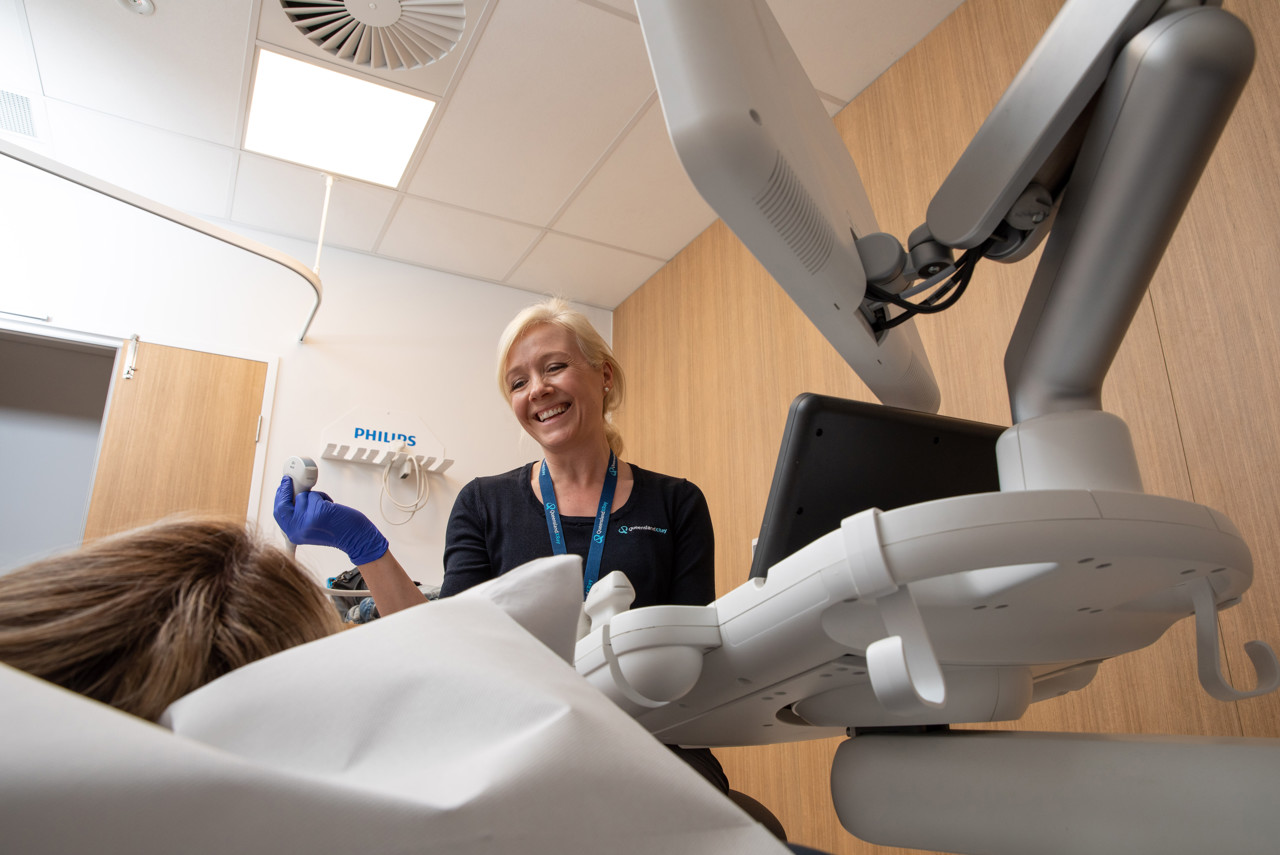
During your scan, a small ultrasound transducer is moved over your lower abdomen with a layer of gel. The gel helps the sonographer move the transducer smoothly over your skin.
The transducer uses ultrasound waves to capture images of the pelvic structures, which are displayed on the monitor.
The sonographer will apply pressure as they move the transducer across your abdomen to capture the required images.
In most cases, a transvaginal ultrasound is also performed.
-
Queensland X-Ray is proud to have a large team of highly trained and accredited professionals. Our quality team consists of male and female Sonographers who are qualified to perform all ultrasound imaging examinations. We also serve as a leading training centre for sonography in Queensland. Through our dedicated focus on education and professional development, our students benefit from hands-on training, supervision, mentorship, and access to the latest imaging technology.
-
A pelvic ultrasound typically takes 30 minutes. More complex scans (e.g. endometriosis assessment) may take longer.
How much will it cost?
Fees for radiology procedures will vary depending on a variety of factors. We will advise you about the cost of your service at the time of booking but if you do have any questions, contact us and one of our team will be happy to help with your query. You can read more about our billing information here.
How do I access my images?
At Queensland X-Ray, we provide our patients with their images and results online. To access your images and results, you’ll need to register for an account when you visit one of our practices. If you’ve already registered, you can access the Patient Portal here.