
Body Composition Scan FAQs
-
To prepare for a Body Composition Scan, please avoid large meals and drinks for a couple of hours before the appointment.
For the most accurate results, it is best to schedule any follow-up scans at the same time of day and under similar conditions as your previous scan/s. A Body Composition Scan is a valuable tool for ongoing health monitoring. By repeating the scan, we can track changes in body composition over time, assess health trends, monitor treatment outcomes, and identify changes that may warrant further investigation.
-
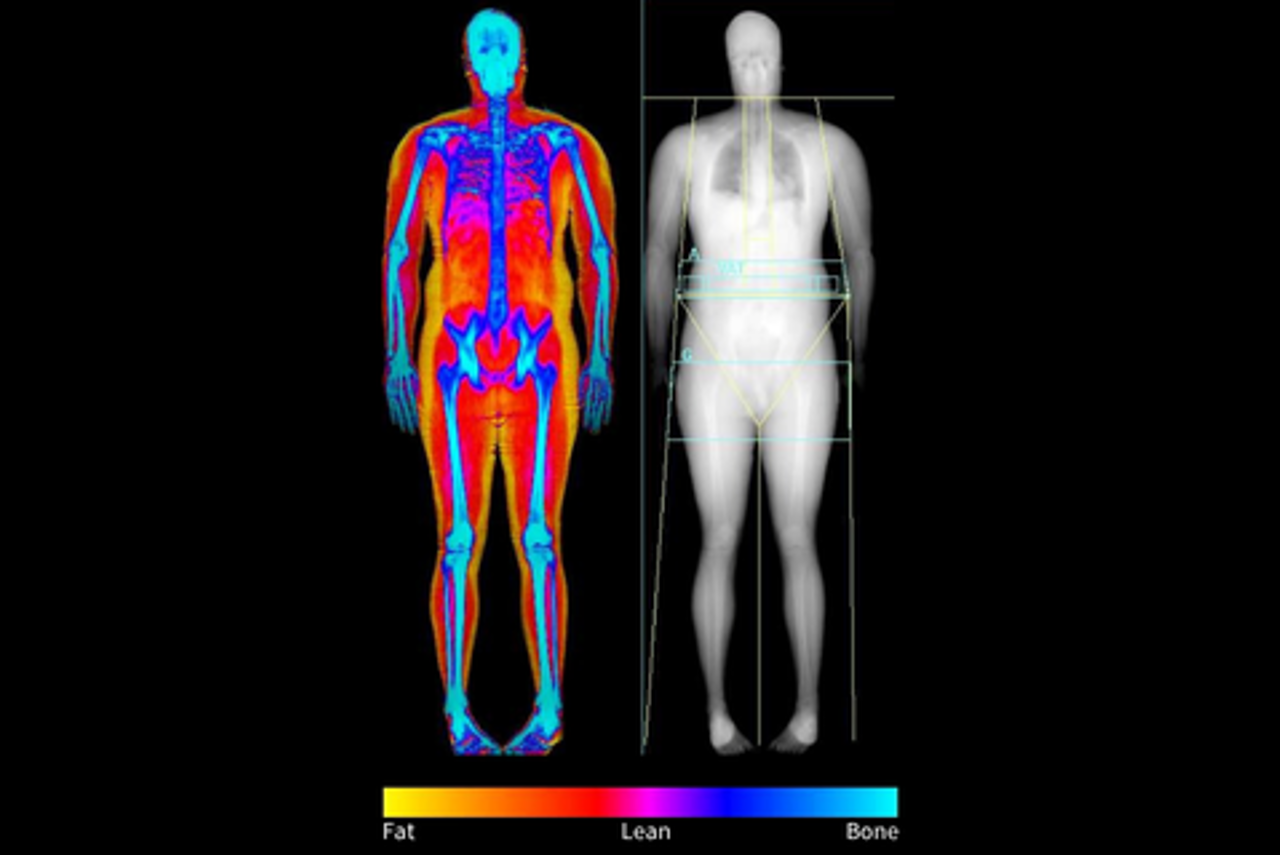
A Body Composition Scan measures bone density, body fat percentage, visceral fat, lean mass, as well as lean mass distribution across each limb (both legs and arms), the trunk, abdomen, and head.
-
You will be required to lie flat on a bed during the scan for about 7 minutes without a pillow. A scanning arm will pass over your body 7 times.
We use a Dual-energy X-ray Absorptiometry (DXA) machine for this, which passes very low X-ray energy through your body. As they pass through the body, the rays are absorbed by your body based on the density of different tissue. This is used to calculate the amount of lean mass, fat, and bone, to assess your body composition.
The imaging process is completely painless and all you need to do is lie still and breathe normally.
-
A body composition scan typically takes 7-10 minutes to complete.
-
For a body composition scan, there are no tight spaces or loud noises. Our friendly staff provides a calm environment to ensure a relaxed experience.
The procedure is non-invasive and painless, requiring no injections or special preparation. You'll lie fully clothed on a padded table while a low-dose X-ray scanner moves gently over your body. The whole appointment will take 20 minutes.
-
You do not need a referral for a Body Composition Scan; you can request an appointment online or call 1300 781 926.
You are limited to four Body Composition Scans per year without a referral. After the fourth scan, a referral from your GP is required for any additional scans.
Many people choose to have these scans to track changes in body composition, support fitness goals or monitor metabolic health.
-
Although Body Composition Scans involve radiation, the radiation dose is extremely low and uses significantly less radiation than traditional X-rays or CT scans.
We also limit the number of self-referred scans to four per year to minimise risk. After the fourth scan, a referral from your GP will be required.
-
A body composition scan measures fat using several key indicators, which will be included in your results. This includes total body fat percentage, fat mass index, Visceral Adipose Tissue (VAT), and the Android to Gynoid Ratio.
- Body Fat Percentage: This indicates the percentage of the body that is composed of fat.
- Fat mass index: This represents the total amount of fat in kilograms relative to a person's height. It is a measure of total fat in relation to body size and is independent of lean mass.
- Visceral Adipose Tissue (VAT): The VAT measurement reflects the amount of internal abdominal fat surrounding internal organs. This differs from subcutaneous fat, which is located just beneath the skin. Increased VAT is closely associated with a higher risk of cardiovascular and metabolic diseases.
- Android to Gynoid Ratio: This ratio compares the distribution of fat in the body, often referred to as the “apple” to “pear” shape. The Android (apple shape) describes individuals who accumulate most of their fat around the stomach and mid-section, while the Gynoid (pear shape) describes those who store fat around the hips. A higher ratio indicates more Android fat distribution, while a lower ratio suggests more Gynoid fat distribution. Similar to the VAT measurement, a higher Android to Gynoid Ratio presents a higher risk of cardiovascular and metabolic diseases.
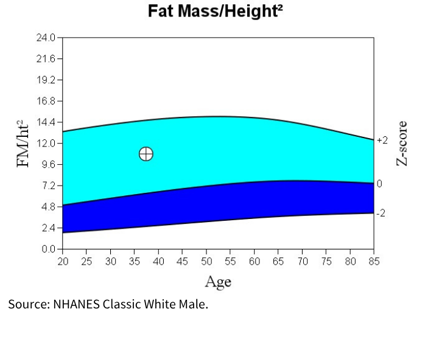
Example -
Lean mass on a DXA includes all tissue in the body that is not fat or bone, including muscle, organs, blood and water.
Appendicular lean mass, which refers to the lean mass in the arms and legs, is the best DXA measurement for assessing skeletal muscle. DXA is frequently used in professional sport to quickly and accurately monitor changes in athletes’ body composition. It is also commonly used by dietitians, exercise physiologists and doctors to track patient progress.
Lean mass preservation is particularly important during weight loss, as it helps ensure patients are primarily losing fat as their body weight decreases.
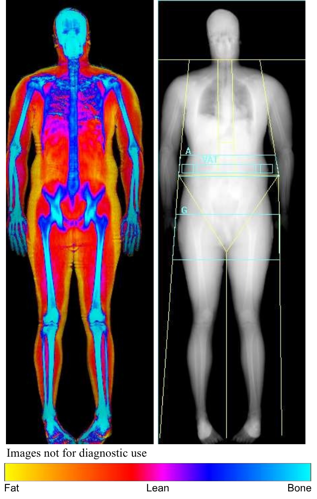
Example -
Your report will also include your Appendicular Lean Mass to Height Ratio (ALM/Height²), which measures the amount of muscle in your arms and legs compared to your height. This is a useful measurement in the assessment of skeletal muscle mass.
-
Whole-Body Bone Density measures the average bone density of your entire skeleton. While it is not a diagnostic scan for assessing osteopenia or osteoporosis, it can be a useful screening tool to identify individuals who may benefit from further assessment.
If your report indicates lower than expected bone density, it is important to follow up with your general practitioner or healthcare provider. You may require a Bone Mineral Density (BMD) scan, which is the gold standard for the assessment and diagnosis of osteoporosis.
As a Bone Mineral Density scan is a diagnostic scan, a referral from your doctor will be required.
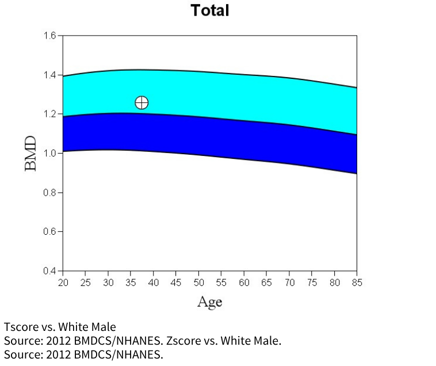
Example -
For a Body Composition Scan you can request an appointment online or call 1300 781 926.
You do not require a referral.
How much will it cost?
Fees for radiology procedures will vary depending on a variety of factors. We will advise you about the cost of your service at the time of booking but if you do have any questions, contact us and one of our team will be happy to help with your query. You can read more about our billing information here.
How do I access my images?
At Queensland X-Ray, we provide our patients with their images and results online. To access your images and results, you’ll need to register for an account when you visit one of our practices. If you’ve already registered, you can access the Patient Portal here.